Executive branch
Library of Congress guide content stored locally for context and branch-level reference.
Have a question? Need assistance? Use our online form to ask a librarian for help.

State profile
Minnesota entered the Union on May 11, 1858 as the 32nd state. Minnesota grew from river and fur-trade crossroads into a state shaped by Native history, immigration, agriculture, mining, and the civic institutions of the upper Midwest. Today its state government is centered in Saint Paul and operates through a governor and a bicameral legislature, while the Twin Cities region anchors much of the state’s political and economic life.
Start here for the statewide basics, key civic facts, and the public links people use most often.
Use this section to understand how the state organizes executive authority, legislative power, and federal representation.
Minnesota organizes state government through an elected governor and a bicameral legislature consisting of a Senate and a House of Representatives. Its statewide institutions place a strong emphasis on budgeting, administrative coordination, and balancing metro and greater Minnesota representation.
Have a question? Need assistance? Use our online form to ask a librarian for help.
Library of Congress guide content stored locally for context and branch-level reference.
Have a question? Need assistance? Use our online form to ask a librarian for help.
Library of Congress guide content stored locally for context and branch-level reference.
Have a question? Need assistance? Use our online form to ask a librarian for help.
Library of Congress guide content stored locally for context and branch-level reference.
Have a question? Need assistance? Use our online form to ask a librarian for help.
Structure: Bicameral
Each state elects two U.S. senators to represent it in the Senate.


House seats are apportioned by population and organized by congressional district, except for at-large delegations where applicable.





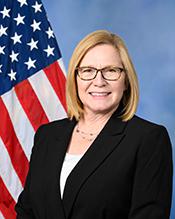
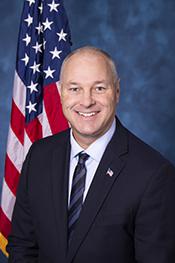

Use one address to identify the people who represent you in Minnesota at the federal and state level. Amplified uses district matching plus locally stored legislator records so the search stays fast and does not depend on live Open States calls for every page view.
Bicameral legislature · Senate / House of Representatives
State systems vary. When a cached legislator match is incomplete, these official tools provide the most direct fallback path.
Browse official chamber pages, member profiles, and legislature resources.
Use the statewide links below for official rules, deadlines, registration, and ballot access tools.
These links combine official state election office pages, saved Google Civic links, manual overrides, and Vote.gov fallbacks when needed.
Confirm that your voter registration is active with your state election office.
Register to vote online or update your name, address, or party information when your state allows it.
Download or review the mail registration process and deadlines for this state.
Find out whether you can register in person before Election Day or at your polling place.
Access voting guidance for military members, their families, and citizens living overseas.
Look up where to vote in person and review any location details provided by the state.
Use this section to check upcoming statewide elections and search by address for polling places, ballot details, and local election officials.
Upcoming statewide elections from Google Civic appear here when they are available.
No upcoming elections for MN are available in Google Civic right now.
Enter an address in Minnesota to check polling places, ballot details, election officials, and any address-based voter tools Google Civic provides.
Saved statewide election links refresh about every 30 days when a seed address is available. Last statewide refresh: April 18, 2026.
Use these cards and charts to understand who lives in the state, how people work, and what basic housing and education patterns look like.
A quick statewide profile of people, work, and housing.
2020 Census urban-rural distribution, shown as a simple share of total population.
These long-run charts keep the economic pressure points in one place: income, wages, rent, housing, tuition, and healthcare. Together they show how the balance between pay and basic costs has shifted over time.
Stored locally and refreshed about every 90 days. Last refresh: April 18, 2026.
Official statewide median household income. The adjusted line converts each year into current dollars so visitors can compare purchasing power over time.
A national context chart showing how the federal wage floor has changed and how much buying power it has lost or gained in current dollars.
A national price index for tuition and school fees. The adjusted line removes overall inflation so visitors can see whether tuition has outpaced the broader cost of living.
A national medical-care price index. The adjusted line removes overall inflation so the chart shows the real rise in health-related costs.
Focus on the statewide economic picture: income, work, industry, housing costs, and major public companies and wage rules.
Current statewide wage rules, tipped cash wages when available, and the biggest official regional differences.
Current state minimum wage$11.41
State requires employers to pay tipped employees the full state minimum wage before tips.
Tipped minimum wage$11.41
No tip credit under state law.
$4.41 above the current federal floor of $7.
State page highlights major official differences and coverage rules rather than every local ordinance.
Current snapshot effective January 1, 2026.
This section organizes nonpartisan state-level resources that help people follow public decisions, review official disclosures, request records, and move from information toward civic participation.
The goal is practical accountability: clearer institutions, easier public access, and straightforward paths for people who want to understand how state government operates and how to engage it.
Public accountability starts with access. These links help people read the rules, review public information, and understand how the state says government should work.
These resources help people follow how power is organized, how money is disclosed, and where to start when they want to monitor public decision-making.
Accountability also depends on participation. These links make it easier for people to register, verify local information, and connect statewide systems to action in their own community.
Accountability and civic-resource links are stored locally with the rest of the state profile and refresh about every 180 days. Last refresh: April 18, 2026.
Keep the most useful statewide civic resources in one place without repeating the links already covered in the Government, Elections, or Accountability sections.
Core statewide data and resource links are cached locally and refreshed about every 180 days. Last refresh: April 18, 2026.
Use this section for the broad statewide civic resources that are not already explained in more detail elsewhere on the page.
These links help visitors move from statewide information into local offices and county-level tools.
This slower-refresh reference layer adds concise branch explanations and curated legal-resource links without making the state page depend on live guide lookups.
Have a question? Need assistance? Use our online form to ask a librarian for help.
Chat with a librarian, Monday through Friday, 12-4pm Eastern Time (except Federal Holidays).
Amplified stores this Library of Congress guide text locally as a slow-refresh reference layer. An optional short intro override is saved for future state-page intro decisions, but it is not automatically replacing the current intro yet.
Library of Congress guide content refreshes about every 90 days in the background. Current ingest status: 37 imported, 19 pending, 0 failed.