South Carolina

South Carolina entered the Union on May 23, 1788 as the 8th state. South Carolina’s political story stretches from the colonial lowcountry and plantation economy through secession, Reconstruction, civil-rights struggle, and rapid modern growth in manufacturing and tourism. Today its state government is centered in Columbia and operates through a governor and a bicameral General Assembly made up of a Senate and House of Representatives.

GovernorHenry McMaster (Republican)
Date entered UnionMay 23, 1788

Government & Representation

South Carolina’s government is organized around an elected governor and a bicameral General Assembly that includes a Senate and a House of Representatives. Columbia serves as the focal point of statewide lawmaking, budgeting, and public administration.

Executive branchExecutive branch

Governor
Henry McMaster (Republican)
Official office

South Carolina's executive branch consists of the governor, lieutenant governor, and the executive agencies. The governor can be elected for two consecutive four-year terms. Apart from this caveat, South Carolina's governor has no total term limits.

Legislative branchLegislative branch

Legislature
South Carolina General Assembly
Chambers
Senate and House of Representatives
Structure
Bicameral
Official site

South Carolina has a bicameral legislature, named the South Carolina General Assembly, which consists of the South Carolina House of Representatives and the South Carolina Senate. The House has 124 members representing 124 districts, with members serving a two-year term. The Senate has 46 members representing 46 districts, each serving a four-year term. Members of the South Carolina General Assembly do not have term limits.

Judicial branchJudicial branch

In South Carolina, the judiciary has four general levels. The Magistrate Courts, Municipal Courts, and Probate Courts are courts of limited jurisdiction hearing cases involving misdemeanors, traffic offenses, and probate matters. The Circuit Court is the trial court of general jurisdiction; the Family Court and Master-in-Equity also exist at this level, hearing specific cases. The Court of Appeals acts as the intermediate appellate court. The South Carolina Supreme Court is the highest court in the state.

Officials Representing South Carolina at the Federal Level

This section brings together the state’s U.S. senators and House delegation in one place for a cleaner statewide overview.

U.S. Senators

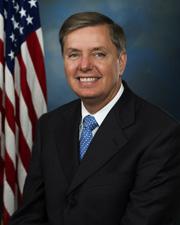
Senator Lindsey Graham

South Carolina

Republican Party

Lindsey has served in Congress since 2003.

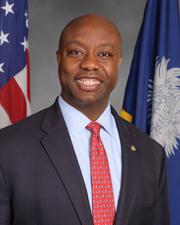
Senator Tim Scott

South Carolina

Republican Party

Tim has served in Congress since 2013.

U.S. House delegation

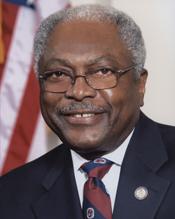
Representative James E. Clyburn

South Carolina District 6

Democratic Party

James has served in Congress since 1993.

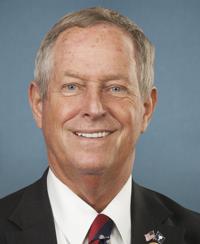
Representative Joe Wilson

South Carolina District 2

Republican Party

Joe has served in Congress since 2001.

Representative Nancy Mace

South Carolina District 1

Republican Party

Nancy has served in Congress since 2021.

Representative Ralph Norman

South Carolina District 5

Republican Party

Ralph has served in Congress since 2017.

Representative Russell Fry

South Carolina District 7

Republican Party

Russell has served in Congress since 2023.

Representative Sheri Biggs

South Carolina District 3

Republican Party

Sheri has served in Congress since 2025.

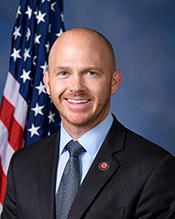
Representative William R. Timmons

South Carolina District 4

Republican Party

William has served in Congress since 2019.