Montana
Montana entered the Union on November 8, 1889 as the 41st state. Montana emerged from a mining and ranching frontier, and its public life has long been shaped by vast distances, federal land, tribal nations, and resource politics. Today its state government is centered in Helena and follows the bicameral model with a governor, a Senate, and a House of Representatives.
Median household income$70,804
Poverty rate11.7%
Median age40.6
GovernorGreg Gianforte (Republican)
Next statewide electionNovember 3, 2026
Government & Representation
Use this section to understand how the state organizes executive authority, legislative power, and federal representation.
Montana is governed by an elected governor and a bicameral legislature composed of a Senate and a House of Representatives. Helena serves as the center of state government for a large western state where land, natural resources, tribal relations, and regional access all shape statewide governance.
Legislative branch
Structure: Bicameral
Judicial branch
Have a question? Need assistance? Use our online form to ask a librarian for help.
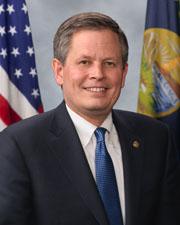
U.S. Senators
Each state elects two U.S. senators to represent it in the Senate.
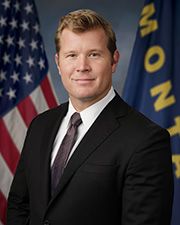
U.S. House delegation
House seats are apportioned by population and organized by congressional district, except for at-large delegations where applicable.


Find Your Representatives
Use one address to identify the people who represent you in Montana at the federal and state level.
Official legislature tools
Find my legislator
State legislature website
Elections & Voting
Use the tools below for official rules, deadlines, registration, ballot access, and upcoming statewide elections.
Search by voter address
Enter an address in Montana to check polling places, ballot details, election officials, and any address-based voter tools Google Civic provides.
Statewide voting links
Statewide voting links
Voting basics
- Check registration
Confirm that your voter registration is active with your state election office.
- Register/update online
Register to vote online or update your name, address, or party information when your state allows it.
- Mail registration
Download or review the mail registration process and deadlines for this state.
- In-person registration
Find out whether you can register in person before Election Day or at your polling place.
- Military/overseas voting
Access voting guidance for military members, their families, and citizens living overseas.
- Polling place finder
Look up where to vote in person and review any location details provided by the state.





Upcoming elections
Upcoming statewide elections from Google Civic appear here when they are available.
Upcoming Elections in MT
No upcoming elections for MT are available in Google Civic right now.