Massachusetts

Massachusetts entered the Union on February 6, 1788 as the 6th state. Massachusetts stands near the center of the American founding story, with political traditions rooted in colonial government, revolution, maritime trade, immigration, and industrial growth. Today its state government is centered in Boston and works through a governor and a bicameral legislature formally known as the General Court, made up of a Senate and House of Representatives.

GovernorMaura Healey (Democratic)
Date entered UnionFebruary 6, 1788

Government & Representation

Massachusetts is governed by an elected executive branch and the bicameral General Court, which consists of a Senate and a House of Representatives. This structure reflects one of the nation’s oldest constitutional systems and ties statewide government to a long tradition of legislative oversight and local civic life.

Executive branchExecutive branch

Governor
Maura Healey (Democratic)
Official office

The Massachusetts executive branch consists of the governor, lieutenant governor, and the state agencies. In Massachusetts, the governor can be elected for two consecutive four-year terms. Massachusetts' governor does not have term limits.

Legislative branchLegislative branch

Legislature
Massachusetts General Court
Chambers
Senate and House of Representatives
Structure
Bicameral
Official site

Massachusetts has a bicameral legislature, named the Massachusetts General Court, which consists of the Massachusetts House of Representatives and the Massachusetts Senate. The House has 160 members representing 160 districts, with members serving a two-year term. The Senate has 40 members representing 40 districts, each serving a two-year term. Members of the General Court do not have term limits.

Judicial branchJudicial branch

In Massachusetts, the judiciary has four general levels. The District Court, Juvenile Court, and Probate & Family Court are the lowest level courts, focusing on cases involving specific subject matter, including misdemeanors, small claims, juvenile matters, and probate matters. The Superior Court is the trial court of general jurisdiction; the Boston Municipal Court, Housing Court, and Land Court also hear specific cases at this level. The Massachusetts Appeals Court acts as the intermediate appellate court. The Supreme Judicial Court is the highest court in the state.

Officials Representing Massachusetts at the Federal Level

This section brings together the state’s U.S. senators and House delegation in one place for a cleaner statewide overview.

U.S. Senators

Senator Edward J. Markey

Massachusetts

Democratic Party

Edward has served in Congress since 2013.

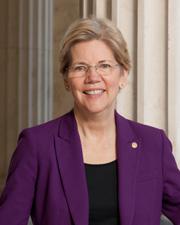
Senator Elizabeth Warren

Massachusetts

Democratic Party

Elizabeth has served in Congress since 2013.

U.S. House delegation

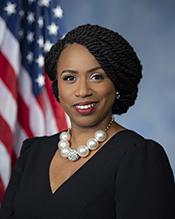
Representative Ayanna Pressley

Massachusetts District 7

Democratic Party

Ayanna has served in Congress since 2019.

Representative Jake Auchincloss

Massachusetts District 4

Democratic Party

Jake has served in Congress since 2021.

Representative James P. McGovern

Massachusetts District 2

Democratic Party

James has served in Congress since 1997.

Representative Katherine M. Clark

Massachusetts District 5

Democratic Party

Katherine has served in Congress since 2013.

Representative Lori Trahan

Massachusetts District 3

Democratic Party

Lori has served in Congress since 2019.

Representative Richard E. Neal

Massachusetts District 1

Democratic Party

Richard has served in Congress since 1989.

Representative Seth Moulton

Massachusetts District 6

Democratic Party

Seth has served in Congress since 2015.

Representative Stephen F. Lynch

Massachusetts District 8

Democratic Party

Stephen has served in Congress since 2001.

Representative William R. Keating

Massachusetts District 9

Democratic Party

William has served in Congress since 2011.